Tree Removal Cost in 2026: Real Prices and How Pros Bid
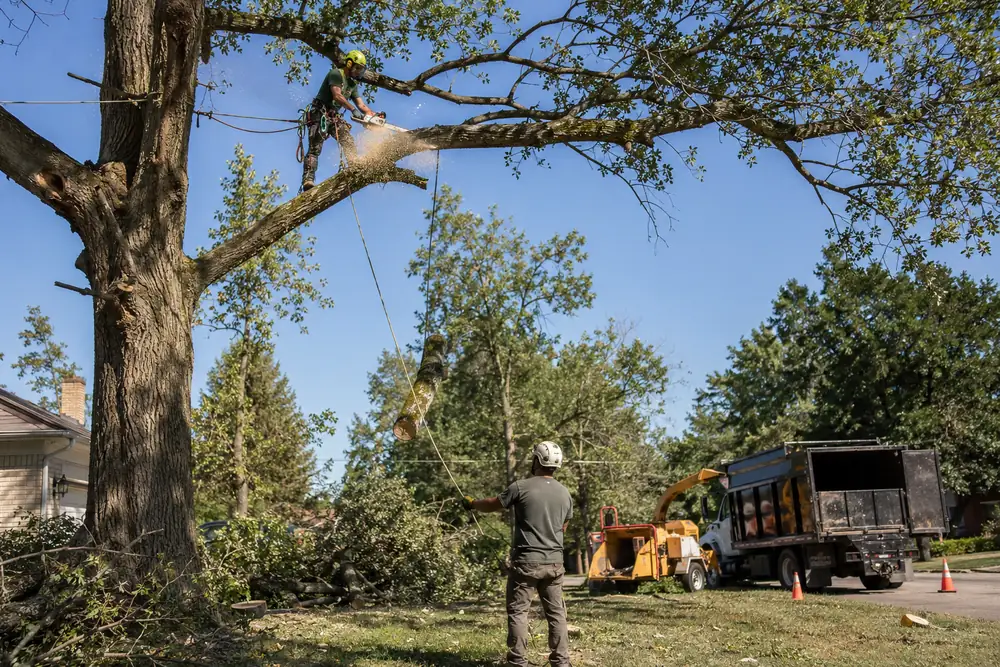
Tree removal cost: for most homeowners in 2026, expect to pay somewhere between $400 and $2,500 to remove a single tree, with small trees landing near the bottom and large hazard trees near the top or beyond. I have spent 16 years climbing and rigging removals, and I can tell you the number on your quote has almost nothing to do with the tree itself and almost everything to do with what is around it.
People call me expecting a price chart. They want me to say a 40-foot oak costs X. It does not work that way, and any crew that quotes you over the phone without seeing the tree is either guessing high to protect themselves or guessing low to win the job and then hit you with change orders. Let me walk you through what actually moves the price, give you honest ranges, and tell you how a real crew puts a number together.
What Actually Drives the Price
Two trees the exact same height can be a $600 job and a $3,000 job. Here is why.
Height and trunk diameter
Height matters, but trunk diameter matters more than people think. A tall, skinny poplar comes down fast. A short, fat hardwood with a four-foot trunk is a lot of wood to cut, lift, and haul. The bigger the diameter, the heavier every single piece is, and the slower the cleanup. We price by the volume of wood as much as the height.
Species and wood density
Soft species like pine, poplar, and silver maple cut quick and light. Dense hardwoods like oak, hickory, elm, and sweetgum are heavier per cut and harder on saw chains. A 50-foot oak is a bigger job than a 50-foot pine, full stop.
Lean and structural condition
A tree leaning the way we want it to fall is a gift. A tree leaning toward the house, with the weight all on the wrong side, means we are rigging every limb down with ropes instead of dropping it. That is slow, technical work, and it costs more. Dead and brittle trees are worse, because you cannot trust the wood to hold a climber or a rigging point.
Proximity to the house and power lines
This is the single biggest swing. A tree in the open back corner of a lot, where we can just fell the whole thing in one piece, is cheap. The same tree two feet off your roof, or tangled in the service line to your house, has to come down piece by piece, each chunk lowered on a rope so it does not punch through your shingles. Anything near a primary power line means we either coordinate with the utility or refuse the job. Never let a crew freelance around energized primary lines.
Access
Can we get a truck and a chipper to the tree? If the wood and brush has to be carried 200 feet through a gate to the curb by hand, that is labor you are paying for. Backyard trees with no equipment access routinely cost 30 to 50 percent more than the same tree out front.
Stump, haul, and chipping
Removal usually means dropping the tree and cutting it up. Two things are often separate line items: hauling off the wood and brush, and grinding the stump. If a quote looks low, check whether it includes haul-away and stump. Plenty of cheap quotes leave you with a yard full of logs and a stump. For stump pricing specifically, I break it down in my stump grinding cost guide.
2026 Tree Removal Cost Ranges
These are honest ranges for a competent, insured crew in a mid-size US market. Big metros run higher, rural areas run lower, and the spread inside each row is the difference between an easy open-yard drop and a tight rigging job near a structure.
| Tree size | Approximate height | Typical removal cost | Notes |
|---|---|---|---|
| Small | Under 30 ft | $250 to $600 | Ornamentals, small evergreens, easy access |
| Medium | 30 to 60 ft | $600 to $1,200 | Most yard maples, smaller oaks |
| Large | 60 to 80 ft | $1,200 to $2,500 | Mature oaks, large pines, careful rigging |
| Very large | 80 ft and up | $2,500 to $5,000+ | Big hardwoods, crane sometimes needed |
| Hazard / dead | Any height | Add 25% to 75% | Brittle wood, no fell, full rigging |
Stump grinding, if not included, usually runs another $100 to $400 depending on diameter. Haul-away of the wood, if you do not want it for firewood, is sometimes bundled and sometimes a separate $75 to $250.
The Storm and Emergency Premium
When a tree is on your roof at 6 a.m. after a windstorm, that is a different job than a scheduled removal. Emergency work means we drop everything, often work in bad conditions, and sometimes deal with a tree under tension that can spring when cut. Expect to pay 50 to 100 percent more for genuine emergency response, and more again if a crane is needed to lift weight off a structure.
That premium is legitimate when the work is genuinely urgent and dangerous. What is not legitimate is the crowd I cover in the red flags below.
How a Real Crew Bids the Job
When I walk a property, here is roughly what is going through my head, and what should be reflected in an honest written quote:
- How do we get the tree on the ground safely, fell it whole or rig it down
- How many climber-hours and ground-crew-hours
- Equipment: bucket truck, crane, chipper, stump grinder
- Haul volume and dump fees for the wood and brush
- Insurance and overhead, which is a real and necessary cost
A good quote is itemized enough that you can see what is included: removal, cleanup, haul, and stump as separate lines or clearly bundled. If you want the full vetting process, read how to hire a tree service before you sign anything.
Red Flags That Cost People Thousands
I have cleaned up after the cheap guys more than once. Watch for these.
- No proof of insurance. If an uninsured crew drops a limb through your roof or a worker gets hurt in your yard, that can land on you and your homeowners policy. Always ask for a certificate of insurance.
- Door-to-door storm chasers. After every big storm, out-of-town trucks roll through neighborhoods offering cash deals. Some are fine. Many are uninsured, take a big deposit, and vanish or do butcher work.
- Large upfront deposits. A small deposit on a big scheduled job can be normal. Half the total in cash before any work, from someone who knocked on your door, is a setup to disappear. Government consumer-protection resources like USA.gov list exactly this kind of large cash-up-front demand among common contractor scams.
- Quotes way under everyone else. If three crews say $1,400 and one says $500, the cheap one is almost always uninsured and cutting corners somewhere you will pay for later.
Permits, HOAs, and Who Owns the Tree
One cost most people never see coming is permission. In a lot of cities and towns, you cannot just remove a tree on your own property without a permit, especially for larger trees, heritage species, or trees in a protected setback. Permit fees are usually modest, $25 to $150 in most places, but the real cost is the delay and the fine if you skip it. Some municipalities will fine you thousands for removing a protected tree, and a few require you to replant. Call your local code or planning office before you schedule, and ask your tree crew whether they pull the permit or you do.
HOAs add another layer. Plenty of homeowners associations require approval before any tree comes down, and some require it before major pruning too. A good local crew usually knows the rules in your area and will tell you. A storm chaser will not, and you will be the one holding the violation.
Then there is the boundary tree, the one straddling the property line between you and a neighbor. Legally that tree is often jointly owned, and you generally cannot remove it without the neighbor's agreement. Sort that out in writing before anyone fires up a saw, or a removal turns into a dispute that costs more than the tree ever would.
Seasonal Timing and Price
Tree work has a rhythm, and timing can move your price. Crews are busiest in late spring through fall when everything is growing and storms roll through. Winter, when the leaves are down, is often the cheapest time to book a non-emergency removal, and it is genuinely easier work too. With the canopy bare, a climber can see the structure clearly and rig more efficiently, and frozen ground means less lawn damage from equipment.
If your tree is dead or hazardous, do not wait for a discount. But if it is a healthy tree you have simply decided to remove for sun or space, booking in the slow season can save you real money and you will likely get a crew that is not rushing between ten other jobs.
Frequently Asked Questions
How much does it cost to remove a tree in 2026?
For most homeowners, expect to pay between $400 and $2,500 to remove a single tree. Small trees under 30 feet land near the bottom, around $250 to $600, while large mature trees of 60 to 80 feet run $1,200 to $2,500, and very large hardwoods can exceed $5,000. The number on your quote depends far more on what surrounds the tree than on the tree itself.
What makes tree removal so expensive?
The single biggest cost driver is proximity to your house and power lines, because a tree two feet off your roof has to come down piece by piece on ropes instead of being felled whole. Trunk diameter, wood density, a bad lean, dead or brittle wood, and poor equipment access all add cost too. A backyard tree with no equipment access routinely costs 30 to 50 percent more than the same tree out front.
Why is emergency or storm tree removal more expensive?
Emergency work means a crew drops everything, often works in bad conditions, and sometimes deals with a tree under tension that can spring when cut. Expect to pay 50 to 100 percent more for genuine emergency response, and more again if a crane is needed to lift weight off a structure. That premium is legitimate when the work is truly urgent and dangerous.
Does tree removal cost include stump grinding and haul-away?
Often it does not. Stump grinding and hauling off the wood and brush are commonly separate line items, so a low quote may leave you with a yard full of logs and a stump. Stump grinding usually adds $100 to $400 depending on diameter, and haul-away can run another $75 to $250. Always confirm in writing what the quote includes before you compare prices.
Do I need a permit to remove a tree on my property?
In many cities and towns, yes, especially for larger trees, heritage species, or trees in a protected setback. Permit fees are usually modest, around $25 to $150, but skipping a required permit can mean a fine of thousands of dollars and sometimes a replanting requirement. Call your local code or planning office before you schedule, and ask whether the crew pulls the permit or you do.
When is the cheapest time of year to remove a tree?
Winter, when the leaves are down, is usually the cheapest time to book a non-emergency removal. Crews are busiest from late spring through fall, so the slow season brings better pricing and a crew that is not rushing between ten other jobs. Bare-canopy work is also easier and cleaner, with less lawn damage from frozen ground. If the tree is dead or hazardous, though, do not wait for a discount.
What I Tell My Neighbors
If the tree is small, in the open, and you have real saw experience plus the right safety gear, dropping a sapling or a small dead evergreen yourself is reasonable. For that kind of work, decent chaps and a quality saw matter more than anything. I cover gear in detail in my best chainsaws for homeowners guide, but at minimum get real protection like a pair of chainsaw safety chaps and a proper forestry helmet with face shield.
Anything over 25 or 30 feet, anything near your house or wires, anything dead or leaning the wrong way, hire it out. I am not saying that to sell you a service. I am saying it because I have seen what happens when a homeowner gets it wrong, and it is never worth the savings.
Get two or three written quotes from insured local crews, compare what each actually includes, and pick the one that explains the job clearly. The cheapest number on the page is rarely the cheapest job by the time it is done. If you want help finding vetted crews in your area, browse our directory of tree pros.